Quick answer
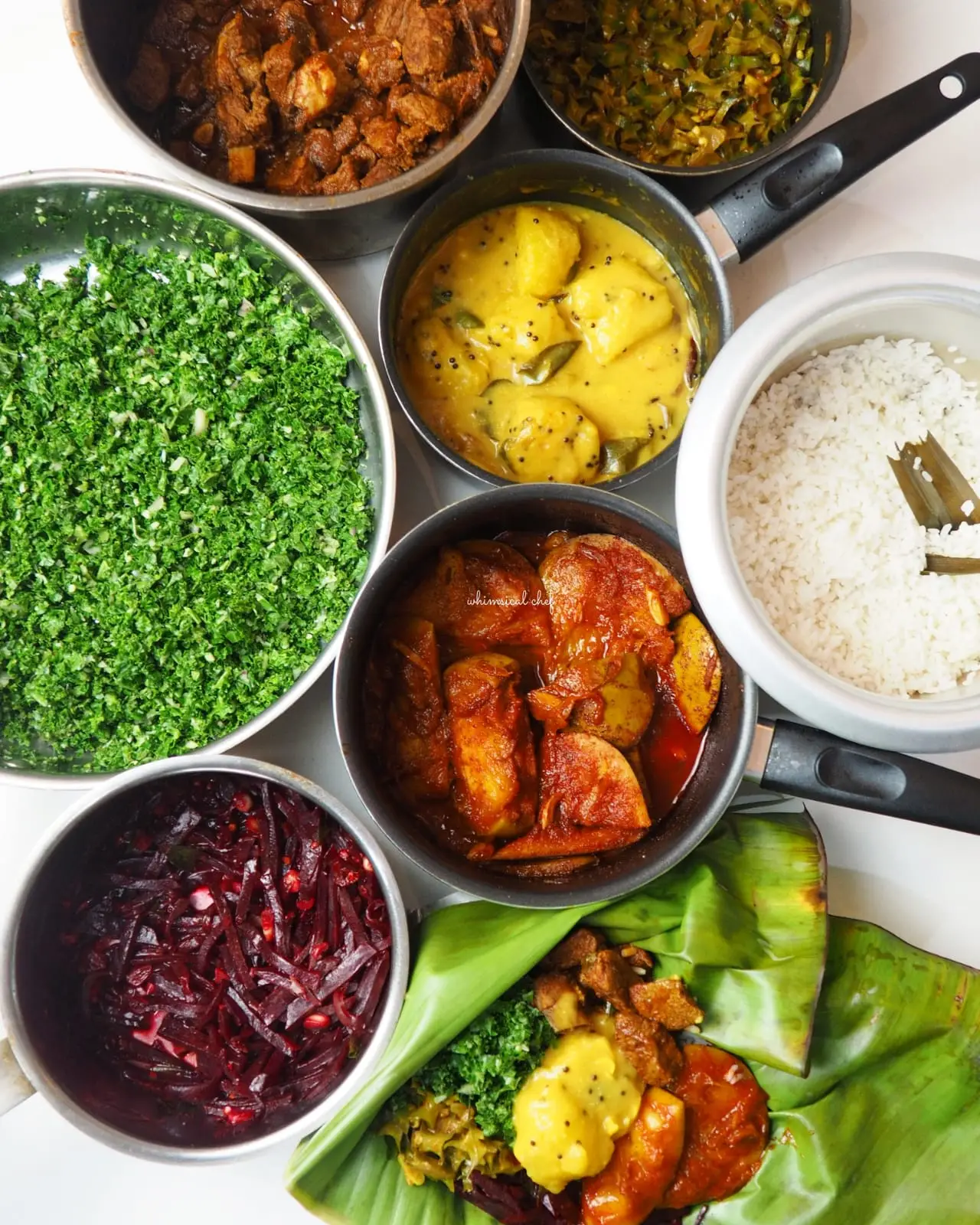
Sri Lankan village food is built around rice and curry: a plate of red or white rice served with several small curries, such as dhal (parippu), jackfruit (polos), a leafy mallung and a fiery sambol. Other classics are hoppers (appa), string hoppers (idiyappam), kiribath (milk rice) and, as a dessert, buffalo curd with kithul treacle. Much of it is naturally vegetarian or vegan.
| Dish | What it is | Diet |
|---|---|---|
| Rice and curry | Rice with 4–8 small curries and sambols | Vegetarian/vegan versions common |
| Parippu | Red lentil dhal cooked in coconut milk | Vegetarian (vegan if made without ghee) |
| Polos curry | Young jackfruit curry | Vegan |
| Gotukola mallung / sambol | Chopped pennywort with coconut | Vegan |
| Pol sambol | Coconut, chilli, onion, lime | Vegan |
| Kiribath | Milk rice, often with lunu miris | Vegetarian |
| Hoppers (appa) | Bowl-shaped fermented rice-flour pancakes | Vegan (egg hopper is vegetarian) |
| String hoppers (idiyappam) | Steamed rice-flour noodle nests | Vegan |
| Pittu | Steamed rice flour and coconut | Vegan |
| Kurakkan roti | Finger-millet flatbread | Vegan |
| Fish ambul thiyal | Sour, dry fish curry | Pescatarian |
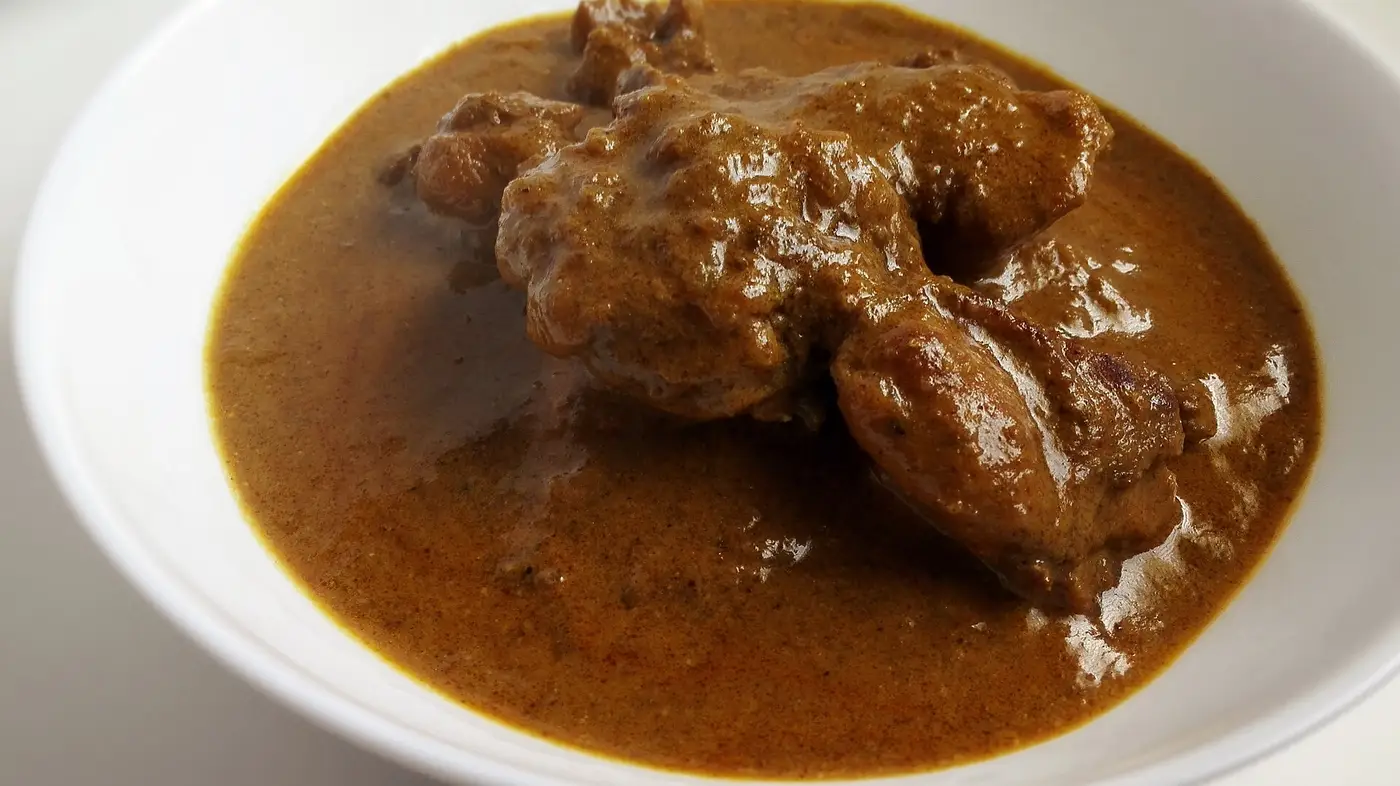
| Chicken curry | Spiced, often with roasted curry powder | Halal on request |
| Curd and kithul treacle | Buffalo curd with palm syrup | Vegetarian |
| Kavum and kokis | Festive sweets for the Sinhala and Tamil New Year | Vegetarian |
| Plain tea / kahata | Black tea, sometimes with jaggery | Vegan |
What is Sri Lankan rice and curry?
Rice and curry is the everyday lunch across Sri Lanka. A plate usually includes rice (red rice is popular in villages), a dhal, one or two vegetable curries, a leafy green mallung, a sambol, papadam and sometimes a fish, egg or chicken curry. Each curry is small, and the fun is mixing them together on your plate. Traditionally people eat it with the right hand.
What do Sri Lankans eat for breakfast?
Village breakfasts are often:
- Hoppers or string hoppers with coconut sambol and a light curry
- Kiribath (milk rice) with lunu miris, a chilli-onion relish
- Pittu with coconut milk and curry
- Roti with dhal
What is kithul treacle and curd?
It is one of Sri Lanka's best-loved desserts: thick buffalo-milk curd served in a clay pot and drizzled with kithul treacle, a syrup made from the sap of the kithul palm. The kithul palm grows in the wet zone, including Sabaragamuwa Province, so you will see it sold around Kegalle District.
Which spices make Sri Lankan food different?
Sri Lankan curry powders are often roasted before use, which gives them a deeper, darker flavour than many Indian blends. Ceylon cinnamon, cardamom, cloves, curry leaves, pandan (rampe) and goraka (a souring fruit) are key ingredients. Many of these grow in the spice gardens around Mawanella. See our spice garden guide.
Is Sri Lankan food very spicy?
It can be. Sambols and some curries are hot, but most kitchens will make a milder version if you ask. Coconut milk curries, dhal, kiribath and hoppers are usually gentle.
Vegetarian, vegan and halal eating in Sri Lanka
- Vegetarian and vegan: Sri Lanka is one of the easiest countries in Asia for plant-based eating. Jackfruit, dhal, greens, pumpkin and beetroot curries are everyday staples.
- Halal: Halal chicken, beef, mutton and fish dishes are widely available. Ask how the meat is sourced. Read our halal-friendly travel guide.
- Pork-free: Many village menus are naturally pork-free.
Eating at Bathle Eco Resort
Our kitchen cooks Sri Lankan village-style food from local produce, with vegetarian, vegan and halal options and a pork-free menu. Tell us about any dietary needs when you book, and ask about trying a full rice-and-curry spread or kithul treacle and curd during your stay.
Meals at Bathle are prepared from locally sourced, organic ingredients from village farms. Hiking early? The kitchen can prepare an early breakfast or a packed lunch for the trail.
Frequently asked questions
What is the national dish of Sri Lanka?
Rice and curry is generally considered the national dish.
Is Sri Lankan food vegan-friendly?
Very. Many staples, including jackfruit curry, dhal (when made without ghee), coconut sambol, hoppers and string hoppers, are naturally vegan.
What is a hopper?
A hopper (appa) is a bowl-shaped pancake made from fermented rice flour and coconut milk, crisp at the edges and soft in the centre. An egg hopper has an egg cooked in the middle.
What is gotukola?
Gotukola (Centella asiatica, or pennywort) is a leafy green, usually served finely chopped with coconut as a mallung or sambol.
Does Bathle Eco Resort serve pork?
No. Our menu is pork-free, and we offer halal, vegetarian and vegan options.
Taste the village: Bathle Eco Resort, Kandumuduna, Hathgampola, Mawanella · +94 77 566 5536 · +94 76 667 3414 · Book your stay
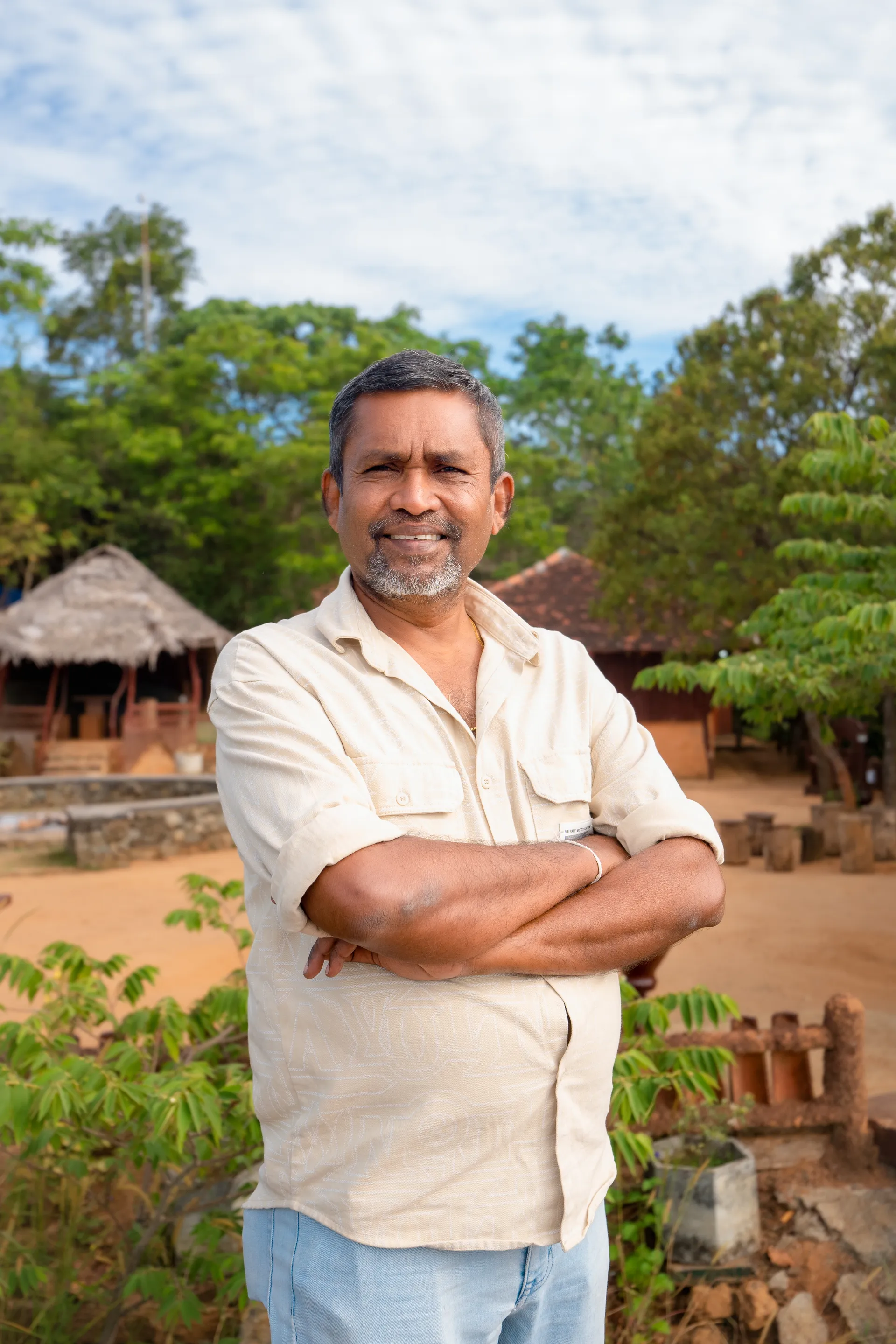
About the author
Founder of Bathle Eco Resort in Hathgampola, Mawanella, at the foot of Bible Rock (Bathalegala).
Plan Your Stay at Bathle Eco Resort
Stay at the closest eco resort to Bible Rock. Book a mud-house cabana, swim in our natural infinity pool and explore Sri Lanka's untouched wilderness.